
Was this worth a coffee? Not a flat white. Just a regular, sensible £2 coffee. If this helped, feel free to buy me one. If it didn't, keep your money , that's only fair
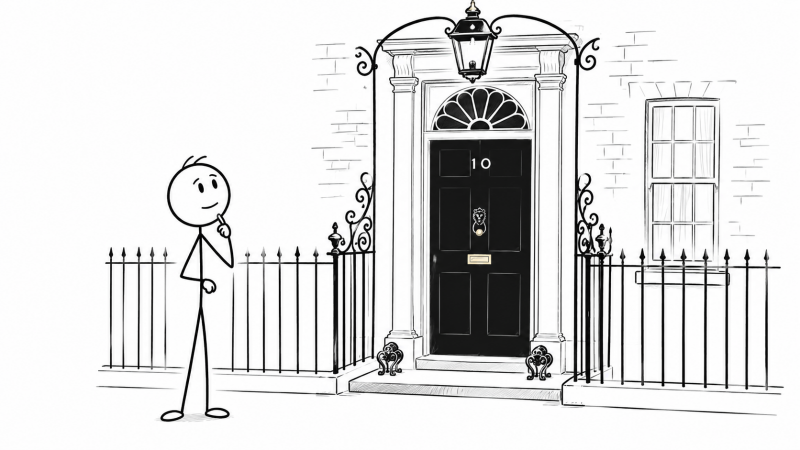
When a new Prime Minister takes office, the rumours start almost immediately.
Tax raids. Pension cuts. Wealth taxes. Changes to inheritance tax.
The headlines can quickly create a sense that people need to do something. The problem is that there is often a significant gap between political speculation and confirmed government policy.
When I wrote my latest Money Wise UK white paper, Andy Burnham was the clear frontrunner to replace Keir Starmer. Events have since moved quickly: he has now been elected Labour leader and is expected to become Prime Minister.
What has not moved as quickly is the policy detail.
That distinction matters.
The purpose of the white paper is not to predict the next Budget or to encourage people to make rushed financial decisions. It is to explore the possible direction of travel and what this could mean for financial planning conversations.
You can download the full Money Wise UK white paper here.
Rumours are not policy, but they are worth understanding
There will inevitably be commentary about what a new Labour leadership might mean for tax.
Some of it will be based on previous speeches and policy ideas. Some will reflect the views of people advising the new leadership. Much of it will simply be speculation.
Financial planning firms need to separate three things:
- What the tax rules are today.
- What politicians and commentators are discussing.
- What clients may need to consider if the rules eventually change.
This is not about second-guessing the government. It is about ensuring that financial plans are flexible enough to adapt.
A plan built entirely around today’s tax rules may become vulnerable when those rules change. A good financial plan should be able to absorb change without requiring a complete rethink.
Why wealth and assets may come under greater scrutiny
One of the central themes explored in the paper is the balance between taxing income from work and taxing accumulated wealth.
Where a government wants to raise additional revenue without increasing the headline rates of Income Tax, VAT or National Insurance, attention may naturally turn to other areas.
These could include:
- Capital Gains Tax.
- Inheritance Tax.
- Property taxation.
- Pension allowances and tax relief.
- Frozen tax thresholds.
None of this means that changes will happen.
However, these are the areas financial planning firms may want to consider when reviewing the resilience of their propositions and client plans.
Could Capital Gains Tax increase?
Capital Gains Tax is already becoming relevant to more investors.
The annual Capital Gains Tax exemption is currently £3,000. The main CGT rates for individuals are generally 18% and 24%, depending on how much of the gain falls within the basic-rate band.
The reduction in the annual exemption means clients with investments outside pensions and ISAs may now have a taxable gain much sooner than they did previously.
There has been speculation that Capital Gains Tax rates could eventually move closer to Income Tax rates. There has also been discussion about whether the CGT uplift on death could be changed or removed.
Neither proposal is confirmed.
However, they raise important planning questions for clients with:
- Large general investment accounts.
- Investment properties or second homes.
- Family businesses.
- Shares accumulated over many years.
- Assets likely to be passed to the next generation.
The danger is that speculation encourages clients to sell assets purely because they fear a future tax increase.
Selling an asset may create an immediate tax charge, alter the investment strategy and move the client away from their long-term plan.
The better conversation is not, “Should we sell everything now?”
It is, “How exposed is the client to a future change, and what sensible options are already available within their plan?”
Frozen tax thresholds matter too
Tax increases do not always come through higher tax rates.
The Personal Allowance for the 2026/27 tax year is £12,570, with the basic-rate limit remaining at £37,700 outside Scotland. Frozen allowances can pull more people into paying tax, or into higher tax bands, as their income rises.
This is often described as fiscal drag.
It can affect:
- People receiving pay increases.
- Retirees drawing taxable pension income.
- Clients receiving a growing State Pension.
- Business owners taking salary and dividends.
- Families affected by income-related tax traps.
Financial planning firms should therefore look beyond the headline rate of tax.
Even where rates remain unchanged, the amount a client pays can increase.
For clients approaching retirement, this reinforces the importance of considering how income will be taken across pensions, ISAs, cash and other investments.
It is not necessarily about paying no tax. It is about avoiding unnecessary tax and creating a sustainable income strategy.
Could Inheritance Tax be replaced by a care levy?
Inheritance Tax has been the subject of political debate for decades.
It is unpopular, complex and often poorly understood. It can also lead families to make decisions based more on fear than on good planning.
One idea previously associated with Andy Burnham is replacing Inheritance Tax with some form of levy linked to the cost of social care.
That is not confirmed government policy.
However, the idea raises a wider question: could estate taxation be restructured rather than simply increased or reduced?
The detail would be crucial.
A change to Inheritance Tax cannot be considered in isolation from:
- Capital Gains Tax.
- Gifting rules.
- Trust taxation.
- Pension death benefits.
- Property ownership.
- Social care funding.
For example, removing the CGT uplift on death without introducing corresponding relief elsewhere could leave some families facing both an estate tax and a future Capital Gains Tax liability on the same asset.
This could be particularly difficult for families who are asset-rich but cash-poor.
The lesson for financial planners is that estate planning should not focus on one tax in isolation. It should consider how the family, the assets and the different tax rules interact.
Is the State Pension triple lock at risk?
The State Pension triple lock increases the State Pension each year by the highest of:
- Average earnings growth.
- Inflation.
- 2.5%.
There is no confirmed proposal to remove it.
However, the debate about its long-term affordability has not gone away.
The Office for Budget Responsibility’s July 2026 analysis projects State Pension spending rising from around 5% of GDP to approximately 9% over the long term. It estimates that the triple lock accounts for around a third of that increase.
That does not mean reform is imminent.
It does mean that relying too heavily on one political promise may create risk within a retirement plan.
For clients approaching or already in retirement, the State Pension remains an important source of secure income. But it should be one part of a wider retirement income strategy rather than the only foundation on which the plan depends.
A robust retirement plan might also consider:
- Personal and workplace pensions.
- ISAs and other savings.
- Guaranteed and flexible income.
- The effect of inflation.
- Later-life expenditure.
- Longevity.
- Tax changes.
- Care costs.
The question is not simply whether the triple lock will survive.
The question is whether the client’s retirement plan could remain sustainable if future State Pension increases became less generous.
What should financial planning firms do now?
The answer is not to encourage clients to act on rumours.
Instead, firms can use the current debate as an opportunity to strengthen financial planning conversations.
Identify which clients may be most exposed
This could include clients with significant taxable investments, second properties, large estates or a heavy dependence on the State Pension.
Stress-test financial plans
Consider what would happen if tax rates increased, allowances were reduced or retirement benefits grew more slowly.
Review the flexibility of retirement propositions
A Centralised Retirement Proposition should be able to accommodate changes to tax, income needs and legislation without forcing unnecessary investment decisions.
Communicate clearly
Clients may see alarming headlines before they speak to their adviser.
Good communication can explain what has changed, what has not changed and whether any action is genuinely needed.
Avoid speculation dressed up as advice
It is reasonable to discuss potential risks. It is much harder to justify irreversible action based on a policy that may never be introduced.
Financial planning should prepare for change, not predict it
Tax rules will change.
Governments will change.
Political priorities will change.
A financial plan should not depend on correctly predicting every Budget or every election.
It should be built with enough flexibility to respond when confirmed changes emerge.
That is the central message of the white paper:
Nothing here is confirmed. All of it is worth understanding.
The firms best placed to support clients will be those that can cut through the political noise, explain the issues in plain English and bring the conversation back to the client’s long-term plan.
Read the full Money Wise UK white paper
The full paper considers the background, current speculation and potential financial planning implications across:
- Capital Gains Tax.
- Frozen Income Tax allowances.
- Inheritance Tax and a possible care levy.
- The State Pension triple lock.
- Retirement and estate planning conversations.
Frequently asked questions
Are new Labour tax changes confirmed?
No. Although the Labour leadership has changed, detailed tax proposals have not yet been confirmed. Financial decisions should not be based solely on political rumours.
Could Capital Gains Tax rates increase?
Higher Capital Gains Tax rates are being discussed by commentators, but no change has been confirmed. Clients should review their exposure without assuming that an increase is inevitable.
Is Inheritance Tax being replaced?
There is no confirmed proposal to replace Inheritance Tax. A care levy has previously been discussed, but the design, rate and interaction with other taxes would determine its impact.
Is the State Pension triple lock being scrapped?
There is no confirmed change to the triple lock. However, the long-term cost of the policy continues to be debated, which reinforces the importance of building retirement plans around more than the State Pension.
Should clients change their financial plans now?
Clients should review their plans, but they should be cautious about taking irreversible action based on speculation. Any decision should reflect their circumstances, objectives and confirmed tax rules.
Disclaimer
This article reflects publicly reported speculation and policy discussion as at July 2026. Nothing described represents confirmed government policy unless expressly stated. It does not constitute financial, tax, legal or political advice. Tax rules can change and their effects depend on individual circumstances. Clients should seek personalised advice from a suitably qualified professional before taking action.
Add comment
Comments